RECIPES

Showing posts with label history. Show all posts

Saturday, 3 February 2024

Dipping Sheep


Until 1993, it was a legal requirement in this country for all farmers to dip their sheep, as a means of controlling/eradicating external parasites.

The sheep would be forced to jump into the swim-pit, where they were to be “dunked” at least twice so that they were completely wet through to the skin.  I can remember my uncle doing this, and how much the sheep hated it.

It may have worked to eradicate parasites, but, unfortunately, knowledge about toxic chemicals and their effect on humans, animals, and the environment, was woefully lacking.

Many of the early dip chemicals had arsenic as a main component, and there are thousands of contaminated dip sites still existing around New Zealand.  Unbelievably, some of them are now being declared Heritage Sites, as evidence of early farming practices.

My grandfather died at the age of 36 years, and I now wonder if these chemicals played any part in his untimely death.  This is a photo of him in the early 1920s, dipping his sheep.


Generally, farm chemicals are more regulated now and there is much more awareness around safety issues.

Dipping sheep has become a thing of the past for most farmers, although there are some who prefer it as a superior method of controlling fly-strike.

Personally, I do not like the use of chemicals but I would much prefer to see them used responsibly, and thus avert much pain and suffering that an animal might otherwise endure, than to not use them at all.

It is a bit of a balancing act, really.

Margaret 😊


Wednesday, 22 June 2022

June Excursion Part 1


This month’s trip out-of-town was a drive to Port Waikato to visit the mouth of the Waikato River, and then down the coast before returning to Hamilton.  The weather was sunny, after a frosty start, but there was a cold wind blowing most of the time.  Thank goodness for a bright red warm woolly hat to keep my ears warm!

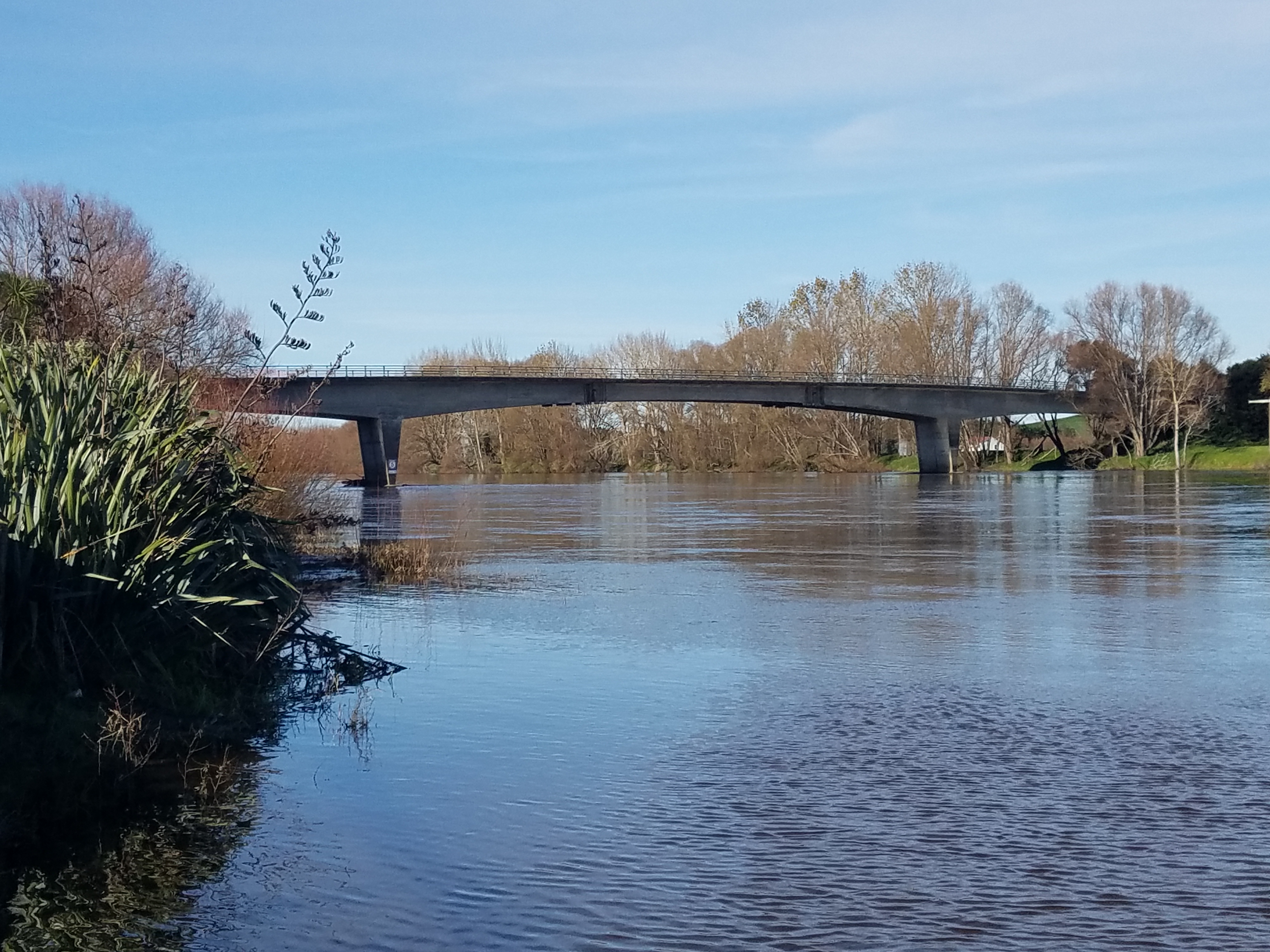
My first stop was at Mercer, named after a British officer who died at the Battle of Rangiriri in 1863.  Until 1965, the only way across the Waikato River here was by ferry. 

This single-span concrete bridge is 150 metres (480 feet) long.


Across from my viewpoint were several buildings belonging to different rowing clubs.  The river here is considered to provide some of the best rowing water in the country.


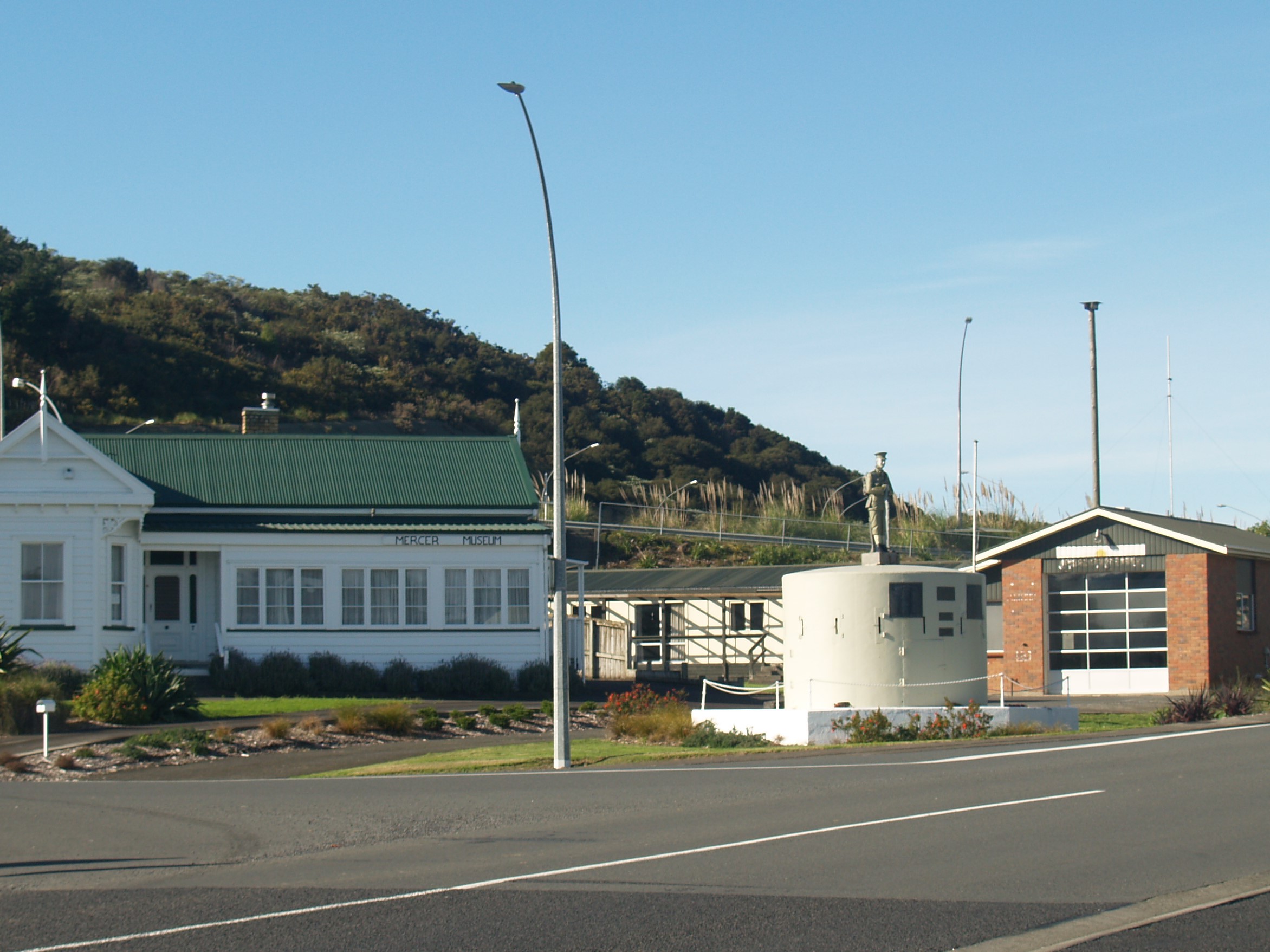
Outside the local museum there is a war memorial.  The soldier commemorates both World Wars, and the gun turret (taken from the steamer ‘Pioneer’) commemorates the Waikato Wars between the British and local Maori.


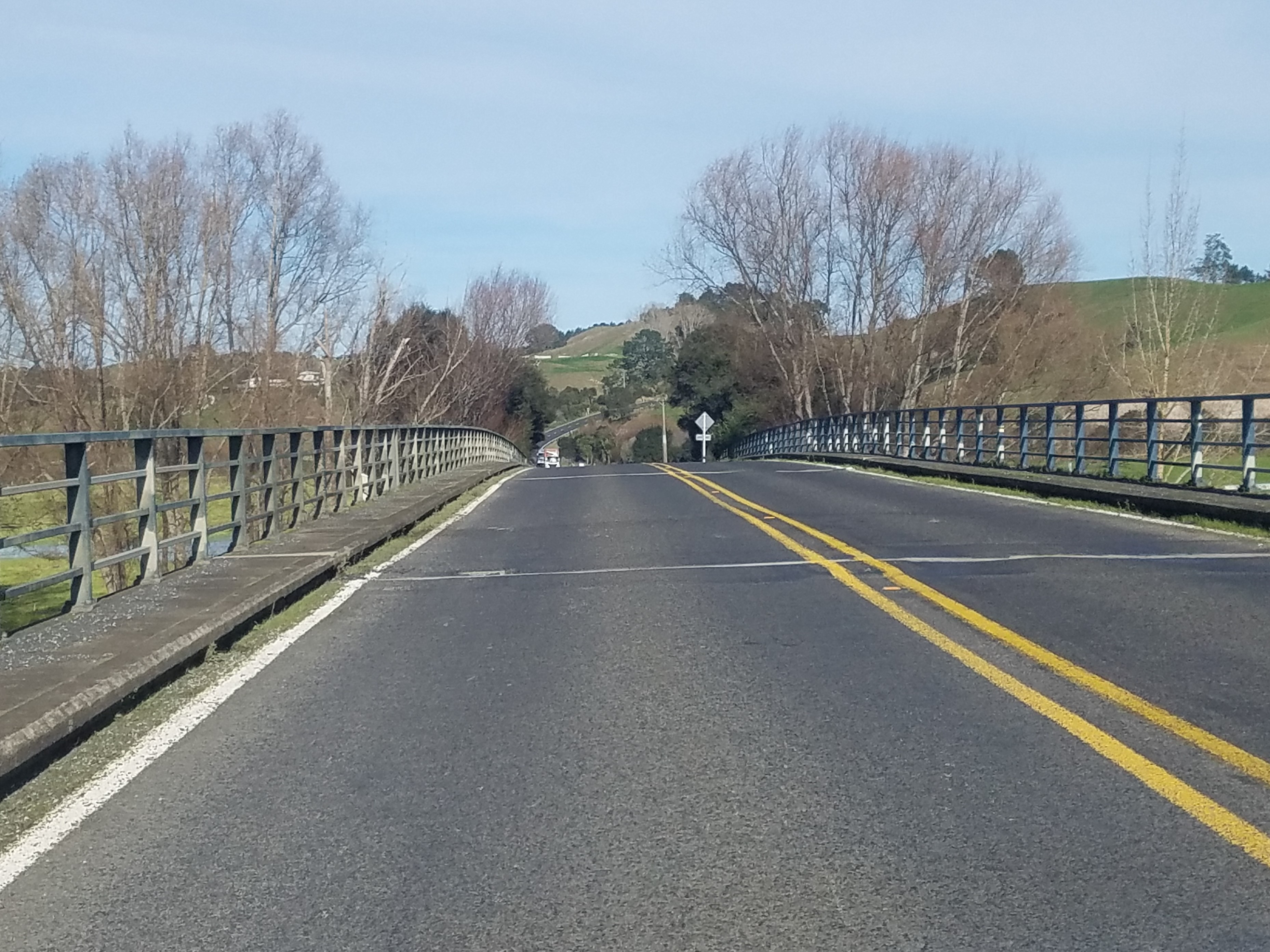
Across the Mercer Bridge, and on with the adventure!


This is the 500th post on my blog and I feel happy that I have been able to achieve this.  I know many have made more (some, much much more!), but I am still an infant when it comes to blogging as I’ve only been doing this for just under two years.

Part 2 of this adventure tomorrow 😊

Margaret.


Thursday, 6 August 2020

Hiroshima

It is 75 years today since Allied Forces dropped a devastating atomic bomb on Hiroshima, to be followed by one at Nagasaki.  It makes me sad to think it took such horrific events to end the mindless killings of a world war. 

My father visited this demolished city some months afterwards and it left a sobering impact on him.


There is a World Peace Bell in Christchurch and this was tolled this morning, along with other Peace Bells around the world.


The history of mankind is littered with the pain and suffering and cruelty of wars and man’s inhumanity to his own kind.

One wonders if it will ever end.


I have had trouble loading the two photographs with this post, so hope they are visible.

Saturday, 13 June 2020

Destroying Statues

There seems to be a fad sweeping the world at the moment to deface or destroy statues/monuments. 

To begin with I thought this apparently wanton destruction was akin to book burning and other vandalistic acts performed against reminders of our history.  Then I realized that the idea behind it was a lashing out, a protest, at what those items represented. 

Throughout human history people have done this - statues have had eyes and heads and limbs removed, and even ancient Egyptian hieroglyphics have been defaced.


Sir John Seddon was NZ prime minister 1893-1906 - so 
will no doubt be blamed for something

Even in our small city there have been calls to remove a statue of the man the city was named after, as he “represents Colonization”.  And yet, Captain Hamilton’s only crime seems to have been that he led his men at the Battle of Gate Pa in the Maori Wars.  He was following orders and died on the first day of fighting.  

The statue was removed yesterday by the City Council on the grounds that its forced removal could damage the structural integrity of the underground carpark beneath it.


I wonder if poet Robert Burns can be blamed for something?

I fail to see what is achieved by all this destruction (history happened and cannot be changed), but I would much rather see a mob attack an inanimate symbol of past history than see them looting and burning and ruining the livelihoods of innocent people, which we have also witnessed lately on our News. 

Sometimes I wonder what is happening to our beautiful world. 

Margaret.


Friday, 1 May 2020

My Grandad


It is 33 years today since my maternal grandfather passed peacefully away, two days after his ninetieth birthday.  I can still remember his gentle placid temperament and how his eyes would twinkle when he was playing a joke on his grandchildren.

I have digital copies of some of his photos, taken on an old Kodak Brownie camera (still in my possession!), so thought I might post a few of them.

Unfortunately I have no idea who most of the people are in his photos, or when they were taken (although I am guessing most were between 1910 and 1930).

My Grandfather.
I wonder if these clothes were high fashion at the time?

One of his first vehicles was a Douglas motorbike

Families used to get together then, as they do now.

These two women were obviously giving their dogs a wash.

Picnics were a popular pastime.

I loved these happy swimmers.

Horses were in daily use on the orchard.

Three young ladies, who may have perhaps been his sisters.

I love looking through these old photos.  If only they could talk!

Enjoy your day J
Margaret.


LINKED TO Timeless Thursdays


Saturday, 25 April 2020

ANZAC Day


The 25th April is a special day for New Zealand and Australia, when we officially remember our Armed Forces and the sacrifices they have made for our two countries.

Normally services are held at dawn and again during the morning, but this year we have Covid-19 restrictions so a special Stand At Dawn virtual service was used instead.  People were invited to stand at their gateways at dawn and pause for a minute’s silence to remember those who have fallen.


My mother used to make wreaths for the local Anzac service (she made the one in this photo).  My father was a Returned Serviceman, as was his father and several other family members.

World War II - my father and his sister

On this day I like to remember members of my family (there have been several) who have served their country in the Armed Forces, and also to thank those who are currently serving.   

World War I - one of my grandfathers

We shall remember them.
Margaret.


I should perhaps make an explanation about what ANZAC Day is:  It is a national day of remembrance for both New Zealand and Australia - ANZAC stands for "Australia New Zealand Army Corps."  The ANZACs served in World War One, but the day commemorates all servicemen and women in both of our countries.

Wednesday, 18 March 2020

Gold Mining Village


Throughout New Zealand are dotted the remnants of early settlements and one of these is Ross, a former gold mining settlement on the West Coast.  Their biggest claim to fame is the discovery of New Zealand’s largest gold nugget (a massive 3.1kg) in 1909.  I visited here in May 2019.

The collection of sphagnum moss, beef and sheep farms, timber milling and the production of lime have all been carried out in this area.  Today the main source of income is tourism, with a Heritage Village to visit, walks to make, and the opportunity to pan for gold (unfortunately this was shut the day I visited). 


The West Coast Wilderness Cycle Trail passes through Ross and this frame makes a great place to stop for a photo opportunity.


I spent an hour wandering around the Heritage Village, including visiting this old gold-mining cottage.


Over the road is situated St Patrick’s Catholic Church, one of the oldest in New Zealand.  It was opened on 21 October 1866 and is still used for mass every two weeks.


Buildings up and down the street were old but mostly still in use, like the Empire Hotel in this picture.


The owner of this place has covered the fence with number-plates off different vehicles.


I drove out to the coast before continuing my journey south, and spent a short while at Ross Beach.  I love these lonely wild windswept beaches with their rocks, driftwood and crashing waves.  They appeal to the Wild Child inside me!


Thank-you everybody for all your comments yesterday.  These are unusual times our world is going through at the moment and it is hurting a lot of people in one way or another.

Today we have beautiful autumnal sunshine with a light breeze.  I can hear machinery working in the distance and there are still a few cicadas singing their song.  It is the kind of warm mellow day that makes one feel decidedly lazy J

Stay safe and keep well,
Margaret.


LINKING UP WITH My Corner of the World


Thursday, 13 February 2020

Ferrybank Reserve


A quiet spot in central Hamilton is the Ferrybank Reserve.  This small area of land, bordered by three roads, is so named because it was the landing spot for punts that used to cross the Waikato River before bridges were constructed.  Maori traditionally also landed their whaka (canoes) here.

I visited it recently when I was in the area, stopping to eat a sandwich for lunch whilst sitting in the band rotunda.

The Hamilton Band Rotunda is classified as a place of historic interest and was built in 1916 out of cast iron and kauri wood.  It was used for a number of years for Sunday performances by local brass bands, and is still occasionally used for special events.


The trees in this area were planted by the Hamilton Beautifying Society during the 1910s.


On the banks of the river itself is located the Hamilton Rowing Club, whose building was constructed here in 1905.  It is just visible on the left among the trees, overlooking the Waikato River.


The Council has a long-term development plan for this area – to be created sometime during the next thirty years.  It would include the creation of a footbridge across the river as well as space for commercial and social activities.

Personally, I like the place just the way it is now.  Quiet, peaceful, with a kind of dignity that comes with age, and a lovely spot to sit and enjoy a breather from the hustle and bustle of the CBD.


It has been another hot afternoon here, in the late 20s Celsius.  Thank goodness for the breeze blowing in our windows.

Enjoy your day,
Margaret.


Thursday, 5 December 2019

Burkes Pass Village


Burkes Pass, gateway to the Mackenzie region in the centre of the South Island, is reached 15 minutes before arriving at Lake Tekapo (when traveling from Christchurch).  Nestled at the foot of the 709 metre (2326 feet) high mountain pass, is a tiny historic village and my day-trip travel companions and I made a short stop here when visiting Tekapo last May. 


It was fun to wander around the collection of antiques and memorabilia on display, some of them being for sale.


Also in the village are old buildings that were mostly erected in the 1870s.  A 30-60 minute meander along the Heritage Walk will take you to see places like a church, the former hotel, an old school, a musterer’s hut, a saddlery, several cob cottages (built of clay and tussock), and a cemetery.  We left this walk for another day in the future, as we were running out of time on this visit.


There are meant to be some lovely picnic spots around the village, so this would probably be a good place to visit during the summertime.

Don't you just love exploring old villages?
Margaret.

Thursday, 28 November 2019

The Bay Of Islands


After a restless night at my accommodation in Awanui, in Northland, I left early in the morning and headed down the east coast to the Bay of Islands.  I had to call in to see the Mangonui Wharf as I had heard so much about it and its fish-and-chips shop. 

The fish shop is on the right of the picture

Unfortunately the shop was not due to open for another two hours and I could not wait that long.  A sign outside advertised that they sold “king prawns, kina tubs, Mangonui chowder, Pacific oysters, hot coffee and cold beer, raw fish salad, smoked fish, marinated mussels, calamari, and kid’s meals.”  It sounded like a great place to buy fresh kaimoana (food from the sea).


I eventually arrived at Kerikeri, a place I had not visited since being on honeymoon fortysix years ago.  I had thought to visit the model Maori Village there, but it too was closed.

The gateway entrance to the Maori village

Across the river from me (accessed by a footbridge) was the historic Stone Store and Kemp House, part of the Mission Station that was established here in 1819.

The Mission Station at Kerikeri

The Stone Store was built in 1832 and has served as a warehouse, trading post, library, army barracks, boys’ school, and general store (not all at the same time!).  Today it operates as a gift and souvenir shop.

The Georgian-style Stone Store

On the outskirts of Paihia is found the Raruru Falls, a five metre high waterfall on the Waitangi River.  I was lucky to find a car park as the place was busy with tourists and families.  There were many people swimming in the rock pools above the falls, and the rest of us were busy taking photographs!

Raruru Falls near Paihia

A visit to Waitangi was another must, and I went there next.  The Treaty of Waitangi was signed here in 1840 between English colonists and Maori chiefs, and is regarded as our nation’s founding document.  A lot of controversy still surrounds this Treaty, and I was pleased to see that the Museum presented both sides of the history in a fairly unbiased manner.

The flagpole on the large sweep of lawn

The building now known as the Treaty House was built around 1833 as a home for the governor James Busby and his family.  It is one of New Zealand’s oldest surviving buildings.

Waitangi Treaty House

Beautiful cottage gardens have been established around the outside of the house, including fruit trees and grape vines.  So very different from when I last visited and the house was a lonely lifeless building that smelt musty and echoed badly.  The restoration of house and garden is great to see.

Part of the cottage garden surrounding the Treaty House

Close by the Treaty House is a Maori Meeting House, built in 1940 to celebrate 100 years since the Treaty was signed.  Together the two buildings are meant to symbolise partnership between the British Crown and the Maori people.  The house itself reflects the stories and carving styles of different tribes around New Zealand, and, after removing my shoes, I had a quick look inside.

Carvings and woven panels inside the Meeting House

The evening was calm and warm and perfect for an evening stroll.  I wandered down from my motel to downtown Paihia and drank in the atmosphere.  There were a lot of people around, patronising one of many different eateries or doing some souvenir shopping.  I thought this statue of a swordfish beside the wharf was rather appropriate, as a lot of deep sea fishing excursions begin here.

Swordfish statue on Paihia Wharf

Paihia had a lovely holiday atmosphere, and one day I hope I can return and explore it further.

Bye for now,
Margaret.

Sunday, 27 October 2019

The Cost Of War

The Maori call it Te Utu – the cost of war.  Most places have memorials to those who have fallen in battle, and in Hamilton it is Memorial Park in Hamilton East.
The Cenotaph, dedicated to "Our Glorious Dead"
I went for a quiet walk through this area this morning.  It was sunny and there were not many people around, as I made my way through the Park and down to the Waikato River.
"Pause To Remember" the fallen of WWII
This wall is dedicated to those who died during WWII.  There are other walls for other conflicts.
War Horses are seldom acknowledged
The plaque here reads:  “WAR HORSE.  To commemorate New Zealand’s gallant war horses who served so bravely overseas in the South African War 1899-1902 and the Great War 1914-1918.  They suffered wounds, thirst, hunger, and weariness almost beyond endurance, but they never failed.  They numbered more than 18,000.  They did not come home.  We will remember them.”
The Spitfire bomber has become part of national legend
This Spitfire Mk XVI plane commemorates “The sacrifice, courage and fortitude shown in the air and on the ground by men and women who served with the Royal New Zealand Air Force in all theatres of war 1939-1945 in defence of our freedom.”
Remembering the New Zealand Navy
The anchor comes from the New Zealand Navy Leander-class frigate HMNZS Waikato, which was decommissioned in 1998 after 32 years of service.  It had a special association with Hamilton, as the city is the main urban area of the province of Waikato.
WWII Artillery Gun
This gun is described as a “BL 5.5 Inch Mk3 Artillery Gun.”  My father was a gunner for part of the time he served in WWII and I wonder if he helped fire one of these.
River bank footpath
The Park connects to the walkways that follow the Waikato River.  It was very peaceful down here, and I sat for a while just contemplating life – as you do.
The Waikato River
I hope this post hasn’t been too depressing.  I feel it is important that we remember those who died or suffered so that we can enjoy the freedom we have to live the lives we do.  And this Memorial Park is a fitting place to do that as one wanders around, as well as enjoying the beauty of the Park itself.

Freedom should never be taken for granted,
Margaret.