RECIPES

Showing posts with label agriculture. Show all posts

Thursday, 20 January 2022

Rabbits


Beatrix Potter’s Peter Rabbit may be a cute little bunny, but his family members can sure do a lot of damage around the place.
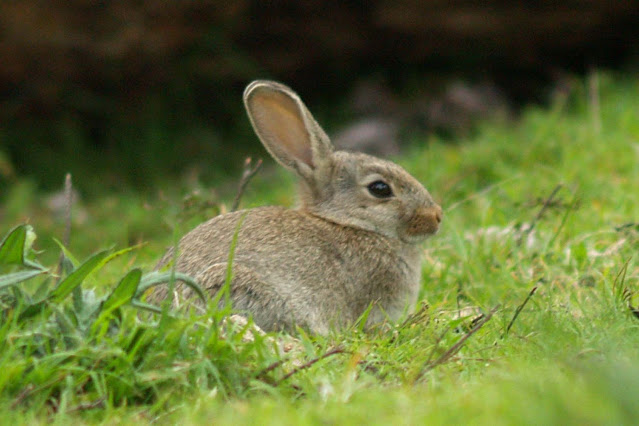


There have been rabbits in my life for as long as I can remember.  Nearly every evening we would see them as they emerged from their burrows, and they were so adorable running and jumping around as they frolicked together.

Most of them had brown fur, but I remember one black one that I thought was so special.

What I wasn’t aware of then, was that they could eat so much pasture grass and were thought of as a major pest in the farming community.  Rabbit Stew was often on our childhood menu!

Today they are considered one of the most serious agricultural and environmental pests in New Zealand, costing millions of dollars in lost production and more millions in trying to control them.

Their burrows can also cause extensive land damage, contributing to erosion problems and making a lot of farming land unproductive.
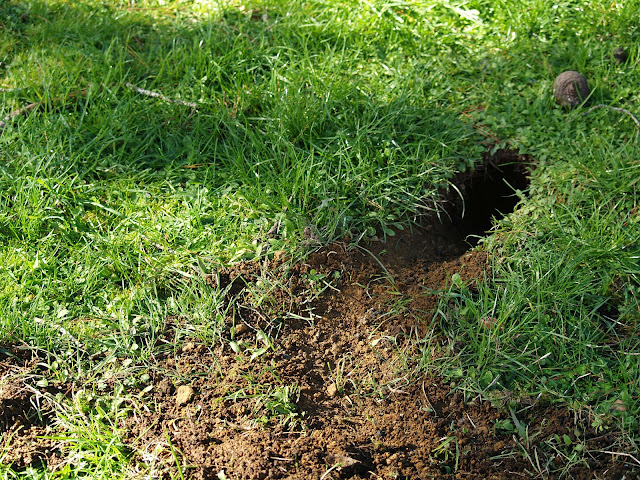


I refuse to believe that rabbits are all bad, though.  They were originally introduced to New Zealand for use as food as they were hardy and reproduced at a tremendous rate.

Early sailing ships would drop off rabbits and goats onto isolated islands in case some luckless sailors were shipwrecked there.  Their fur could also be used for clothing.

And they make really sweet pets 😊


I have a little rabbit,

Whose ears are soft as silk.

His eyes are round as saucers,

And his coat as white as milk.

My rabbit cannot talk to me,

But only twitch his nose.

I can tell when he is happy,

As twitchety-twitch he goes!


Margaret xx


Wednesday, 21 April 2021

Maize Silage


Agriculture is a great way of watching the seasons change.  It is currently time to harvest maize silage (for cattle feed) – heading for the end of autumn but before winter wetness arrives.


Driving on country roads at this time of year means almost inevitably that you will meet a harvester and/or trucks with high sides and tractors with trailers. 

The whole plant (cob, leaf and stalk) is chopped up finely together and loaded into a vehicle to be carried away to a silage stack.  Often the stack will be on a different farm, the farmer having purchased the crop for his own use.


Once the silage has been dropped off at its storage place, it is rolled firmly and shaped into a stack before being covered with tarpaulins and tyres until it is required for use as highly nutritious winter feed.


The sun is shining this morning, but we have a slight possibility of thunder later on.  Time to get the washing hung out so it can dry before any rain comes 😊

Margaret.


Thursday, 4 June 2020

The Classic Sheep Photo


I found this photo in my archives and thought it summed up quite nicely what sheep farming in New Zealand used to be like.


My uncle owned a sheep farm and used to have several dogs and always carried a crook with him.  He used to ride horses (or walk) to check on the stock around the farm.  

Today things are usually done from a farm bike and I haven't seen a crook for a long time.

Have a great day :)
Margaret.

LINKED TO Timeless Thursdays

Saturday, 11 April 2020

Harvest Memories


I used to love going with my husband in the truck during maize silage time.  This harvest is in full swing at the moment, classed as essential work along with most other agricultural businesses.

The maize is harvested once the cobs are fully formed but are still ‘green.’  That is, the kernels are still at the milky stage and not dried as is needed when harvesting for grain.


The harvester, known locally as The Chopper, would cut and chop the entire plant before sending it through the chute and onto a waiting truck.


As one truck was filled, another would be waiting to take its place.


It was easy to see which part of the paddock had been harvested!  The pieces that were missed would be collected by the chopper on its last circuit of the paddock.


The truck would then carry its precious load (imagine the sweet smell of freshly chopped maize, I loved it) to where the stack was being built.  Sometimes this could be quite a distance away, as usually the person growing the crop and the person buying it would be different people.


The Stack Tractor is responsible for shaping the silage stack and compressing it down firmly.


Once completed, the stack would be covered with polythene and weighted down with old tyres.  After a couple of months it will be ready to use as supplementary winter feed for cattle.


Farm life is a great way to stay tuned into the different seasons of the year, as is caring for a garden.  Each season has its own work and its own beauty.

Let’s appreciate every day for what it brings,
Margaret.


Friday, 31 January 2020

Aerial Topdressing


Aerial topdressing is the use of fixed-wing aircraft to spread fertilizer onto farmland.  It first became commercially viable in New Zealand during the 1950s, and was especially useful on hill-country farms (where using a spreader-truck was not safe) although many others used it as well.


Topdressing planes were commonplace in my childhood years.  I can remember my father having fertilizer, usually superphosphate, spread regularly over our home farm.  He would go up in the plane with the pilot to point out were the farm boundaries were and which paddocks he wanted fertilized, and then leave him to it.


Today GPS is used for more accurate placement of the fertilizer, meaning the majority of the product will land where it is required and other areas can be avoided, such as buffer zones for waterways. 


The last time I watched a topdressing plane in action was in 2007, near Te Awamutu in the Waikato.  That is when these photos were taken.


Although our temperature today is reaching the late 20s there is quite a strong wind blowing, which makes things feel a little cooler.

I did a double class at the pools again this morning – aquacise and then aquazumba.  We had a different tutor than normal and she was much slower – easier to do, I thought, but by the end I was feeling quite cold so obviously a faster pace is better.

Kakepuku Mountain, where the topdressing took place

And so the first month of 2020 passes by.  I guess it will be Christmas again before we know it!

Margaret.


LINKED TO Skywatch Friday

Friday, 24 January 2020

Dairy Cows

When I was out driving yesterday I came across this herd of dairy cows.  The Waikato (the region the city of Hamilton is situated in) is one of the main dairying areas of New Zealand.


This herd had a high percentage of Jersey cows in it (the golden brown ones) - a lot of local cows are Friesian (black and white) or Friesian Cross breeds.

As a youngster I remember my father having both breeds in his herd.  The Jersey bulls were really obstreperous and we were never allowed into the paddock with them.


A mixed herd was considered the best of both worlds at that time - Jerseys for rich milk and Friesians for quantity.  I'm not sure what the priorities of today's farmers are.

Margaret.


Linked to Skywatch Friday