RECIPES

Showing posts with label birds. Show all posts

Wednesday, 6 September 2023

Magpie Treasure


Along our fence we have hung several hanging baskets that we (or, rather, my son) has filled with annuals.  They look so pretty when in bloom and give us lots of joy.

They make Nature happy as well.  Some of the baskets have a coir lining and the birds love the free nesting materials on hand.

The sparrows usually make good use of the wiry strands, pulling out each one before flying off with it.  But yesterday and today I have witnessed a magpie doing the same.

Only it doesn’t take individual strands – it pulls out tufts and keeps pulling until it has a beak full of nesting treasure before flying off into the trees.

I managed to take this photo through the net curtains.  I’m sure if it had been aware of my presence, it would not have hung around.  They usually fly off the moment they see any movement in a window.


Have a happy day 😊

Margaret.


Thursday, 29 September 2022

An Astonishing Migration


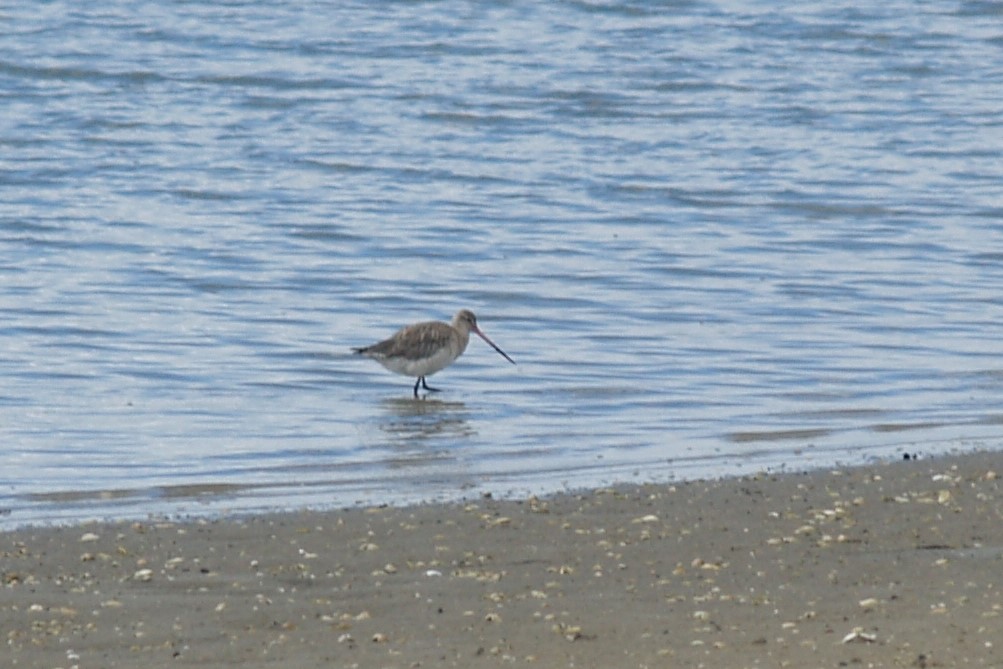
Sometimes Facebook pages can be exciting.  I have recently been watching the page for the Pukorokoro Miranda Shorebird Centre as they record Bar Tailed Godwits (Limosa lapponica baueri) arriving back on the sandy shores of Kaiaua on the Thames Estuary (I visited here in May – read about it HERE).


Every year around March (autumn) these medium-sized waders migrate to western Alaska for the breeding season.  Several birds have been fitted with special tags that allow for satellite tracking of their flights, and they are now returning one by one to our shores.

On the flight over to Alaska the birds often stop at the Yellow Sea between China and Korea, but their flight back here is a direct 11,000 – 12,000 km flight with no stops along the way.

Their average flight speed is around 56 kilometres per hour, with juveniles making their first trip when barely four months old.

About 9.30pm last night, bird 4BWWB dropped unseen (and probably hungry and exhausted!) onto the Kaiaua mudflats after flying non-stop for over 12,100 kms – a trip of some 8 days and 14 hours.


This is the third season this bird has been followed on her migration.

I never cease to be astonished and amazed by the miraculous wonders of nature 😊

Margaret.


Friday, 27 May 2022

Miranda Shore Birds


Next door to the coastal village of Kaiaua (see my last post) is the small settlement of Miranda, and it was here that I visited the Miranda Shorebird Centre.


There was not much time to linger here, as it was almost high tide and the perfect time to visit the bird hides at Robert Findlay Wildlife Reserve.


The birds most obviously in evidence were these South Island Pied Oystercatchers (Haematopus finschi) gathered together on the mudflats.


I was informed that there were Wrybills (Anarhynchus frontalis) present in this group of birds, but had no way of getting close enough to see them properly.


It was different with the Pied Stilt (Himantopus himantopus), of which there were several to be seen as they poked about in the shallow water for insects to eat.


There were a number of White Faced Herons (Egretta novaehollandiae) in the area.  They are a relatively new arrival in New Zealand, having become self-introduced in the 1940s.


This group of Pied Shags (Phalacrocorax varius) standing to attention were beautifully silhouetted in the still waters of a nearby pond.


We have another sunny day here, after a slight frost this morning. 

I have a funeral to attend this afternoon (a lady who was a friend of my parents), and then we will be into the weekend again.  The year seems to be going by quite quickly.

Make the most of every day – life is too short not to!

Margaret 😊


Sunday, 31 October 2021

Meeting Raptors in Arizona


It is three years now since I was last in America, three years since I last saw my daughter.  I am so thankful we can Zoom together and message each other whenever we feel like it.  Modern technology is great!

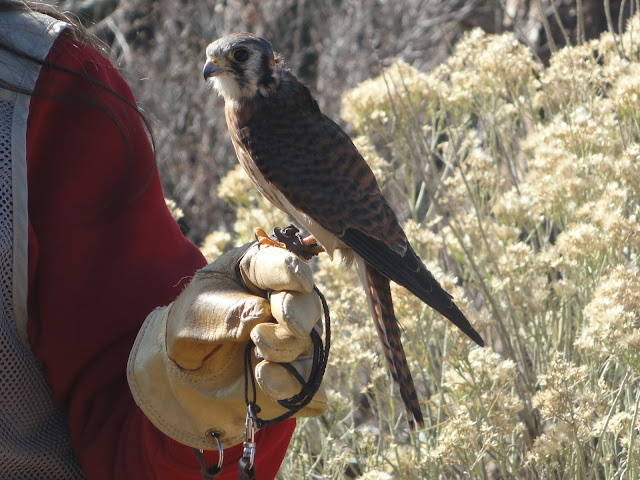
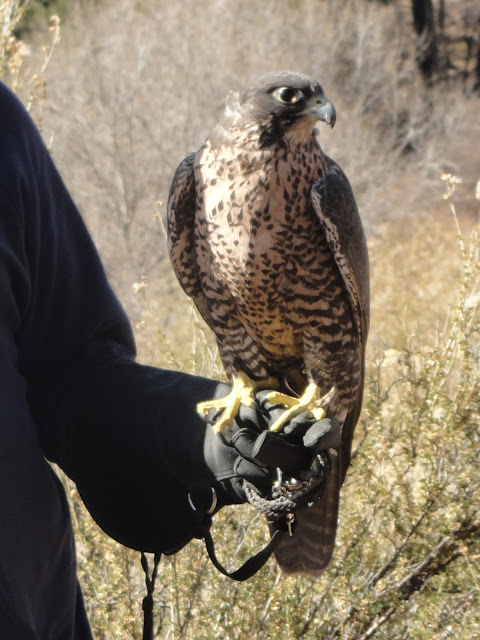
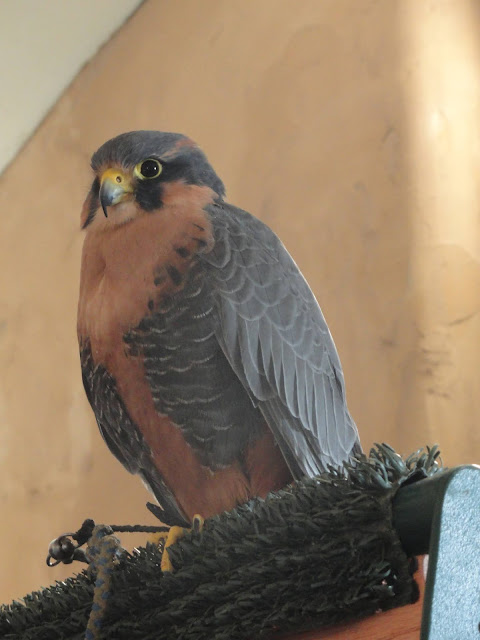
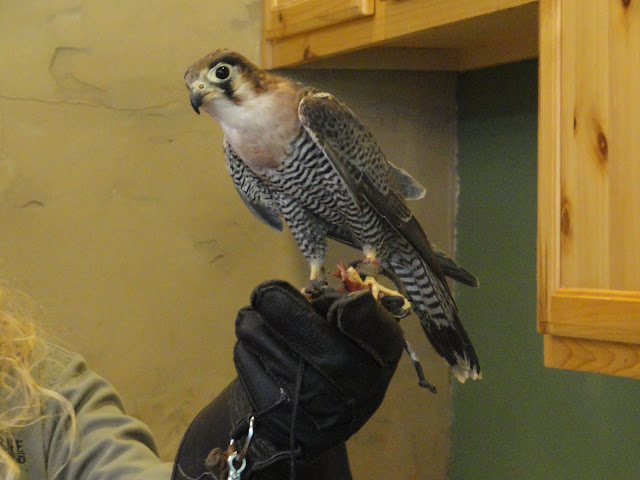
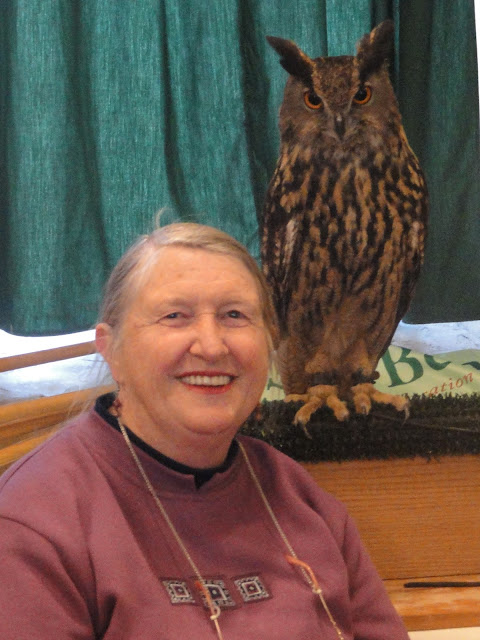
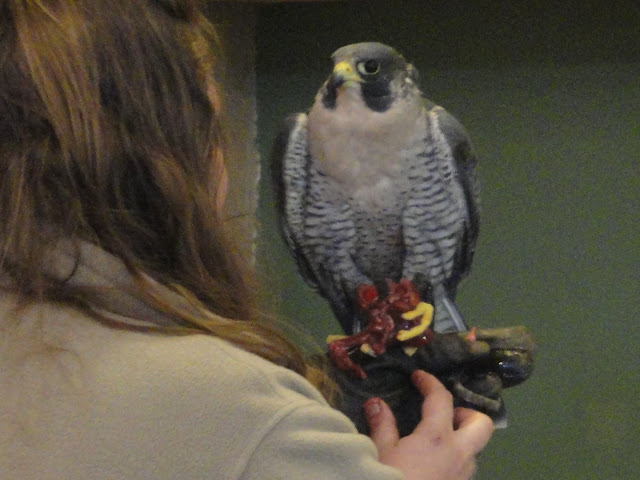
One of the highlights of my last visit was going to a show by Airborne Raptors Unlimited where we could get up close, and fairly personal, with several different raptors.

Here are photos of some of them – I think I have the names correct (sorry, no Latin names).


American Kestrel


Gyrfalcon


Northern Aplomado Falcon


Merlin Falcon


Self and Eurasian Eagle Owl


Feeding time for a Peregrine Falcon


It was such a privilege being able to see these spectacular birds up close and learn more about their lives.

I hope you have enjoyed seeing these photos of them,

Margaret 😊


Tuesday, 26 January 2021

Our Endangered Kakapo


I have been enjoying a weekly programme on TV called Modern Dinosaurs, dealing with unusual creatures found only in New Zealand that are believed to be descended from dinosaurs.


Tonight, the programme was primarily about our critically endangered Kakapo.  This large flightless parrot (double the size of a chicken) is believed to have descended from therapods and lived throughout our forests until around 800 years ago, when humans first arrived here.  

Since that time they have had to contend with men (they made easy food, early settlers describing them as being so common that they “fell out of the trees”), rats, pigs, stoats, cats and dogs, and by the mid-1990s there were only around fifty birds left.


An intensive conservation effort was started and now there are at least 150 birds living on the predator-free Codfish Island (there are other areas in the programme as well, but this Island has the greatest concentration of birds).

Every kakapo on the Island is chipped, named, and carries a radio transmitter for location purposes.  Each bird is captured every year to give it a health check and to change the transmitter battery.


Kakapo may be flightless but they can use their large beak to help them climb trees in search of food.  They are vegetarian and their diet changes seasonally.

During mating season, the loud booming of the male can be heard for up to a kilometre away.  Modern technology is being used for DNA testing to help combat inbreeding (about a third of all eggs laid are infertile).


I am glad we have such dedicated conservators to care for these unique and beautiful birds.

Take care and be kind to your environment,

Margaret 😊


These photos were all taken from the television programme mentioned above.


Sunday, 19 July 2020

Me And Some Birds

Thank-you so much to everyone for their comments on my Headache post.  Unfortunately it developed into a migraine but this afternoon I am (thankfully!) coming out the other side.  I still feel rather fragile and have difficulty concentrating (a bit like having concussion), but am on the mend.

I said I would post a few more bird photos from Otorohanga Kiwi House, and I am doing that now as they were all ready to go.

 * * * * * * *

There were no kiwis on display when I visited, but I did manage to see some other birds.

This Grey Teal (Anas gracilis) (Maori name tete moroiti) is a small nomadic dabbling duck that was self-introduced from Australia.


The Blue Ducks (Hymenolaimus malacorhynchos) (Maori name whio) are now a “nationally vulnerable” species with a declining population.  They prefer clear fast-flowing rivers as a habitat, but their ground-built nests are very vulnerable to mammalian predators (especially stoats and opossums).


The Morepork (Ninox novaeseelandiae) (Maori name ruru) is New Zealand’s most common owl.  It can be found in both native and plantation forests and will dwell in city areas with a lot of trees.  A night hunter, it takes its name from its distinctive call, which sounds like “more-pork.”


New Zealand Falcons (Falco novaeseelandiae) (Maori name karearea) are often confused with Australasian harrier hawks, but falcons are smaller, fly faster, and seldom eat carrion.  Captive breeding and release programmes are slowly having an effect, and once endangered populations are now increasing.


Have a happy weekend J

Margaret


Sunday, 12 July 2020

A Few Birds

Also found on my camera card were photos taken at the Otorohanga Kiwi House last year.  Here are some of them.
The Red-crowned Parakeet (Cyanoramphus novaezelandiae) (Maori name kakariki) were once widely distributed across New Zealand but are now mostly found on some outlying islands.


Kea (Nestor notabilis) (Maori name kea) are unusual in that they are the only truly alpine parrot in the world.  They are incredibly curious and highly intelligent, quickly learning how to pull things apart and depart with them.


The Pied Stilt (Himantopus himantophus) (Maori name poaka) is a dainty little bird that is common in coastal and wetland areas.

  
New Zealand Pigeon (Hemiphaga novaeseelandiae) (Maori name kereru) is widespread throughout both islands, including a lot of cities.  Its heavy flight makes a slow whump-whump sound that is quite noticeable as it flies overhead.


More to follow in a couple of days J
Margaret.


LINKED TO Saturday's Critters

Sunday, 5 July 2020

Roadside Chickens

Several years ago a mysterious person or group began distributing chickens at various rest-stops around New Zealand.  Their colourful cheeky presence brightened many a traveller’s day.


The chickens thrived in their wild condition, helped along by a public who generally adored them.


The chickens were colourful and friendly, and great for feeding picnic scraps to.
But obviously they became a problematic issue once they began breeding prolifically.


Quietly and methodically, officialdom has slowly removed all these birds.  I can think of only one lay-by now where there are still chickens and that is actually on private land.


These photos were taken of chickens that were living at a country picnic spot near to our house.  They would wander through every day on their search for food.  We used to provide water for them.


We always enjoyed their daily visit J
Margaret.


Sunday, 21 June 2020

Winter Solstice

Today has been the Shortest Day, a turning point for the year.  Traditionally our weather will now get colder and wetter, but the days will also be growing longer.

When we lived on a farm I used to enjoy winter visits from these beautiful birds.


White-faced Herons are often locally called Blue Herons because of their bluish colouration.  They are an Australian species and first arrived in New Zealand during the 1940s.


This one decided it had had enough of its photo-shoot and was making a dignified exit.


Enjoy your weekend J

Margaret


Friday, 19 June 2020

It's Been A While

This morning I returned to my beloved Hamilton Gardens, for the first time in three months.  It was early in the morning but not too chilly, although it was a little misty (it was 7 degrees Celsius).


The sickly smell of rotting fruit assailed my nostrils as I drew near to this bank.  Nobody had collected the nashi pears fallen from the overhead tree, and the bank was alive with birds feasting on the bounty.


The birds were mostly blackbirds.


But there were quite a few little waxeyes (also known as silvereyes) as well.


The heavenly scent of wintersweet was much nicer than the rotting nashis!


A large patch of daphne was also spreading its heady fragrance out over the pathway.


I love the golden butter-yellow fallen leaves of the gingko tree.  Most trees around the city have now lost their leaves but this one is sheltered from the worst of the winds.


A thrush was enjoying a worm breakfast among the leaves.


I walked past this bridge as I returned to the carpark.  The sun was at just the right angle to light up the trees on the far side of the bridge, making some attractive reflections.


The remainder of my day I have spent at home, quietly pottering around doing this and that and not much of anything in particular.  

I hope your day is a happy one J  

Margaret.


Wednesday, 13 May 2020

Over The Lewis Pass


Twelve months ago I was in the South Island, visiting friends and family and doing a bit of sightseeing as I traveled around.

The main route between Nelson and Christchurch is the road that leads over the scenic Lewis Pass, across the Southern Alps.  This road was opened in 1937 and leads first through trees of Southern Beech with their black trunks.


The Maruia Falls are found a short distance before heading into the mountains.  They were created by the 1929 Murchison Earthquake, and this photo was taken in 2012 when the Falls were in flood.


At the summit of the Pass is found the entrance to St James Walkway.  Hidden not far from the car parking area can be found a very pretty mountain tarn.


This little lake can have amazing reflections, a bit like in this photo that was taken on an earlier visit.


The birds here can be very friendly.  This one is a little Tomtit.


A South Island Robin also came visiting.

  
There are some lovely river views to be had when coming down the Canterbury side of the Pass, but very few places to safely stop and photograph them.


Lewis Pass (and a couple of voracious sandflies!) was soon left behind, as the road headed down towards the Canterbury Plains and the city of Christchurch.


It is great to go visiting different places when we can.  There is always so much to see and new memories to create, even if we have been to the same place before.

Have an awesome day J
Margaret.